REVIEWED BRIEF + PRACTICAL GUIDE
For Arabic speech and subtitling
Read the speech-model announcement, then test words and numbers on your own sample before relying on an accuracy claim.
RADAR
Dated, reviewed AI updates and decision guides to help you evaluate announcements before trying a feature.
PICK YOUR RELEVANT UPDATE
Choose an update for your work, then use a related practical guide. Source announcements are not our own product benchmarks.
REVIEWED BRIEF + PRACTICAL GUIDE
Read the speech-model announcement, then test words and numbers on your own sample before relying on an accuracy claim.
REVIEWED BRIEF + PRACTICAL GUIDE
Read the GitHub secret-detection update, then review AI-generated code with bounded permissions and explicit rejection cases.
REVIEWED BRIEF + PRACTICAL GUIDE
Explore the CPU prompt-rewriter announcement, then define framing and placement tests for your own image; the announcement is not a quality guarantee.
SOURCE-LINKED UPDATES
Listed by the date of editorial publication, not by model or product ranking.
Latest published news: 2026-11-21
TokenEconomizer is an open-source plugin designed to reduce token consumption for AI coding agents by learning from previous repository sessions. It functions as a black-box controller that optimizes efficiency without requiring modifications to the underlying agent or its model.
Read the briefAWS Quick has introduced updates to transform individual processes into standardized team workflows. The release features multi-agent orchestration for complex requests, enhanced web app functionality with daily briefings, and the ability to build automated flows through conversational chat.
Read the briefNovo Nordisk deployed an agentic AI system on AWS to update complex manufacturing process documents, aiming to reduce lead times and improve access to critical manufacturing knowledge.
Read the briefAntigravity is releasing multiagent systems based on Gemini 4 models to solve complex problems in mathematics, chemistry, and systems software, making these tools available to external researchers and developers.
Read the briefGoogle has released the Gemini 4 Hydrogen Flash model, designed for fast and efficient coding, to the general public on GitHub Copilot. The model focuses on improved instruction following compared to previous versions.
Read the briefGemini app users in the U.S. can now connect Google Wallet to receive responses informed by their spending habits. The integration, available on web, Android, and iOS, allows for personalized financial planning and budgeting.
Read the briefGitHub will deprecate specific models across all Copilot experiences on December 14, 2026. These models will be replaced by supported alternatives, with an exemption for annual plan subscribers using Claude Haiku 4.5.
Read the briefAmazon Bedrock has released AgentCore runtime version V2, introducing a snapshot-based mechanism to accelerate agent session startup. By preparing the environment once and restoring a snapshot for new sessions, the platform provides faster and more consistent response times for interactive experiences.
Read the briefThis technical guide details how to build a self-service LLM gateway using LiteLLM on AWS Fargate. The gateway abstracts Amazon Bedrock behind an OpenAI-compatible API, enabling centralized access control, per-user cost monitoring, and model performance observability.
Read the briefWarhammer 40,000: Dawn of War IV is joining the GeForce NOW library, enabling cloud-based real-time strategy gameplay. Additionally, NVIDIA DLSS 5 with 3D-Guided Neural Rendering will be integrated into War Thunder and Where Winds Meet.
Read the briefAmazon Bedrock has updated its AgentCore runtime, a managed compute layer designed to run AI agents securely. The update utilizes Firecracker microVMs for hardware isolation, addressing the need for scalable, efficient environments that balance performance and cost for developers deploying autonomous agents.
Read the briefAmazon has released SGLang-Neuron, an out-of-tree plugin that enables serving models and generating reinforcement learning rollouts on AWS Trainium. Users can utilize existing SGLang workflows and APIs through an AWS Deep Learning Container.
Read the briefNatera developed SWARM, an agentic AI system using Amazon Bedrock AgentCore to automate diagnostic workflows, reducing first response time by 130x and improving coverage across support tickets.
Read the briefGitHub has introduced a public preview for managing AI Scan for repositories using the REST API. This update allows organizations to enable or disable the feature at scale via scripts, replacing manual configuration.
Read the briefAmazon has introduced a Web Search API on Amazon Bedrock AgentCore, enabling developers to perform web searches via a single API call using standard AWS credentials. This direct integration allows for real-time web grounding in custom orchestration frameworks and non-agent applications without the overhead of the full AgentCore Gateway.
Read the briefJava development teams can now build autonomous AI agents using Amazon Bedrock and Spring AI, enabling agents to plan, invoke tools, and maintain context across multi-turn conversations.
Read the briefThe AWS Generative AI Innovation Center has released a catalog of 23 production-ready, open-source assets, including RAG pipelines and agent scaffolding, to reduce development timelines. These building blocks provide validated, security-reviewed components to help developers avoid rebuilding existing solutions.
Read the briefA NeurIPS 2026 workshop study found that large language models (LLMs) do not consistently excel at judging personalized writing, with performance varying by task and evaluation criteria.
Read the briefGoogle has introduced Gemini Live to Apple CarPlay, allowing iOS users to conduct hands-free, natural voice conversations while driving. The feature enables users to manage calendars, summarize emails, and brainstorm ideas without taking their eyes off the road.
Read the briefGoogle announced AlphaGenome 2, a next-generation model that predicts how DNA variants impact hundreds of human cell types, offering researchers a tool to identify cellular drivers of disease with improved precision.
Read the briefGoogle's Gemini 4 Carbon model is now generally available in GitHub Copilot, designed for complex coding and secure code generation.
Read the briefTrovata has introduced autonomous agents to automate treasury workflows, addressing fragmented banking data and manual reporting challenges. The solution leverages Amazon Bedrock and AgentCore to connect with over 10,000 banks, enabling real-time cash analysis and forecasting.
Read the briefNVIDIA is contributing new open source components to the CNCF to support the DSX AI Factory Platform, including OpenShell for securing autonomous agents and tools for managing GPU infrastructure on Kubernetes.
Read the briefAnthropic has released Claude Fable 5.2, a new iteration of the Fable series, into general availability on GitHub Copilot. The model is designed to handle complex, multi-step coding tasks within large codebases. It is currently accessible to users of Copilot Pro+, Max, Business, and Enterprise plans.
Read the briefREAD NEXT
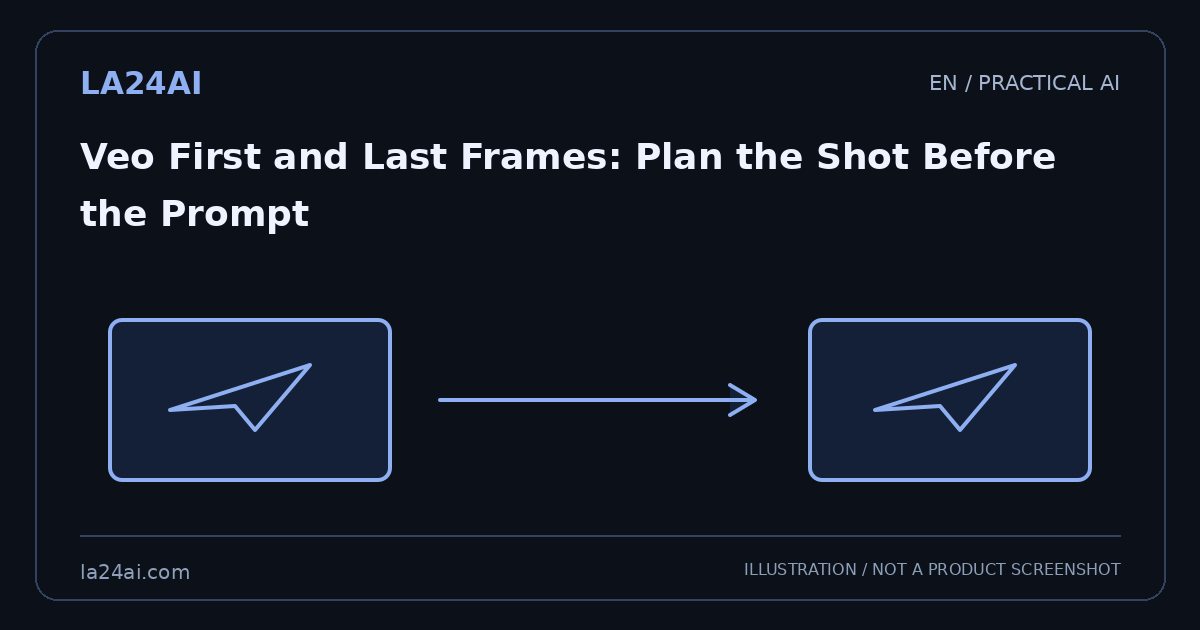
Define an inspectable video transition with consistent endpoints, a separate reference role and a motion brief that describes what must happen between them.
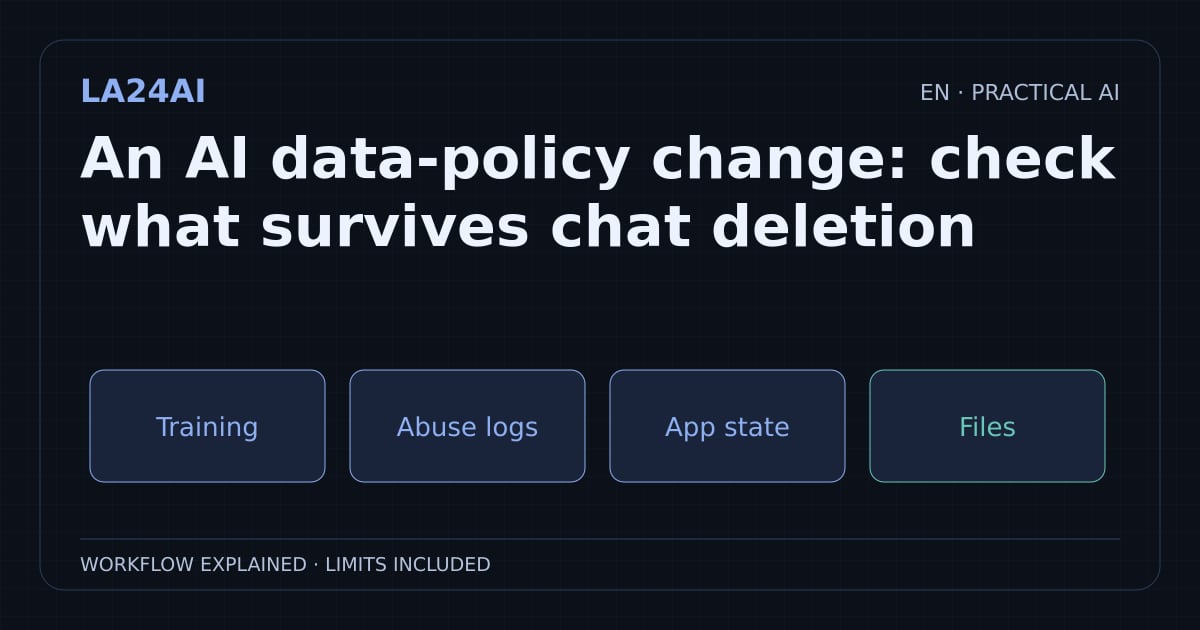
Separate training use, abuse logs, application state, files and third-party tools when reading an AI provider’s retention-policy update.
Inspect evaluation scope, settings and untested conditions, separating safety mitigations from evidence for your own task.
Distinguish outages from usage limits and authorization failures, recording evidence before repeated retries.
Track revision, tokenizer and configuration changes, distinguishing edited documentation from changed weights before comparing results.
Read provenance and integrity signals without confusing them with factual truth, rights clearance or proof that an image was never edited.
Distinguish downloadable weights from usage conditions and tie the model identity to a license revision before interpreting an announcement.
Separate announcement and shutdown dates, locate real dependencies, and test replacement input and output contracts rather than changing only the model name.
Budget messages, tool overhead and reserved output, distinguishing a capacity limit from useful retrieval quality instead of treating an announcement number as proof.
Track weight provenance, revision and fingerprints, separating storage-format safety from trust in code a loader may request.
Translate credits, attempts and subscriptions into comparable costs, separating an advertised rate from accepted exports and account limitations.
Distinguish an announcement from actual access, checking account, platform, version and eligibility before treating a missing feature as a defect.